
Wrapped in Surprise, Stuffed with Politics

by Arang Keshavarzian | published June 17, 2013 - 3:33pm

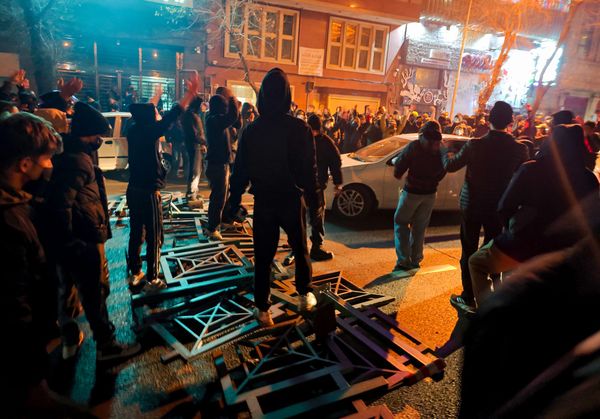
Many Iranians are pinching themselves and smiling uncontrollably after Hassan Rowhani’s victory in the June 14 presidential election. The purple-clad campaigners for Rowhani (or Mohammad Reza Aref, who stepped aside for Rowhani a few days before the balloting) still taste the bitterness of 2009, when their call “Where is my vote?” met with the full force of the regime’s security apparatus. They knew that reform-oriented candidates do better when 65 percent or more of eligible voters participate.

North African Commonalities (part two)

by David McMurray | published April 2, 2013 - 11:35am

Bill Lawrence is director of the North Africa Project for the International Crisis Group. He is a former Peace Corps volunteer (Morocco), Fulbright scholar (Tunisia), development consultant (Egypt), State Department official, Arabic translator and filmmaker (Marrakech Inshallah, Moroccans in Boston). He has also participated in the production of 14 albums of North African music, including co-production of the first internationally released Arabic rap song. He has lived in North Africa for 12 years, six of them in Morocco. I spoke with him in Rabat on March 15. (Part one of the interview is here.)

North African Commonalities (part one)

by David McMurray | published April 2, 2013 - 11:02am

Bill Lawrence is director of the North Africa Project for the International Crisis Group. He is a former Peace Corps volunteer (Morocco), Fulbright scholar (Tunisia), development consultant (Egypt), State Department official, Arabic translator and filmmaker (Marrakech Inshallah, Moroccans in Boston). He has also participated in the production of 14 albums of North African music, including co-production of the first internationally released Arabic rap song. He has lived in North Africa for 12 years, six of them in Morocco. I spoke with him in Rabat on March 15.

Can you talk about the problems in Libya caused by the proliferation of militias and arms?

The Syrian Cataclysm

by Omar S. Dahi | published March 4, 2013 - 4:48pm

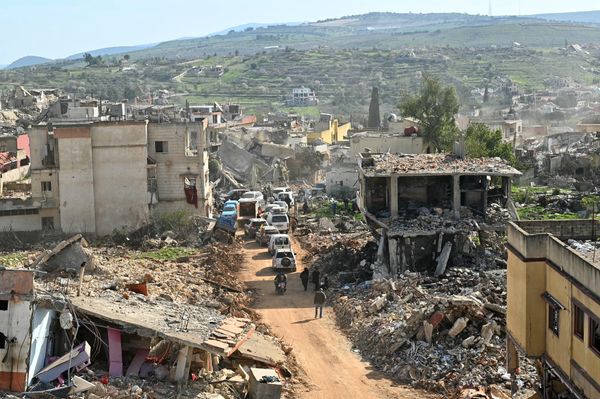
For obvious reasons, coverage of the uprising and internal war in Syria has been dominated by the terrible human toll. An estimated 60,000 Syrians (or more) have been killed, with tens of thousands more scarred bodily and emotionally by the violence. As of the end of February, over 3 million Syrians are either internally displaced or refugees in neighboring countries.

CAFMENA Letter re: Syria

published February 24, 2013 - 5:07pm

The Committee on Academic Freedom of the Middle East Studies Association of North America has published an open letter regarding armed attacks on university campuses in Syria. We reproduce the letter below:

Open Letter to the Office of the Syrian President and the National Coalition for Syrian Revolutionary and Opposition Forces

February 19, 2013

To Whom It May Concern,

Inquiring Into International Commissions of Inquiry

by Lori Allen | published February 24, 2013 - 2:01pm

A Palestinian political prisoner, Arafat Jaradat, died in Israeli custody on February 22.

The Shinbet, Israel’s internal intelligence service, claims that Jaradat, 30, died of natural causes. Palestinian authorities suspect foul play, and the Palestinian prime minister in the West Bank, Salam Fayyad, expressed “shock” at the news. Somewhat more proactively, ‘Isa Qaraqa‘, the Ramallah PA minister in charge of prisoner affairs, demanded an “international commission of inquiry to probe the circumstances of [Jaradat’s] death.”

The Bouazizi Effect in Morocco

by David McMurray | published February 21, 2013 - 10:13am

On December 17, 2010, a young Tunisian itinerant seller named Mohamed Bouazizi had a minor run-in with the cops. It was just another of many, but at this last indignity, the now world-famous produce vendor snapped. Later that day, in protest against his interminable humiliation at the hands of the police, he set himself on fire in front of the local police station. The rest is history.

The Laryngitic Dog

by Sheila Carapico | published February 14, 2013 - 7:04pm

Senate hearings to confirm John Brennan as the Obama administration’s appointment to be director of the CIA brought to light a heretofore clandestine American military facility in Saudi Arabia near the kingdom’s border with Yemen. While journalistic and public attention rightly focused on extrajudicial executions of Yemenis and even American citizens, the new revelations suggest a larger covert Saudi-American war in Yemen. There’s almost certainly more to this story than what Saudi Arabia fails to confirm.

Iran and the IAEA at Parchin

by Aslı Bâli | published February 7, 2013 - 4:40pm

Few foreign policy issues garner as much interest in the American press as the Iranian nuclear program. As illustrated by last week’s Senate Armed Services Committee confirmation hearing for President Obama’s nominee as secretary of defense, former Republican Sen. Chuck Hagel, the US government is equally focused on Iran. The committee was more concerned with Hagel’s positions on Iran than his views on Afghanistan, Pakistan, Yemen and Somalia combined -- despite that fact that these countries are all places where the US military is engaged in combat, something not true of Iran.

Drones, US Propaganda and Imperial Hubris

by Sarah Waheed | published January 25, 2013 - 11:38am

Pakistanis should be more supportive of having their national sovereignty violated by Americans, according to US-based political scientists who favor drone strikes in Pakistan. I am trying hard not make this sound like an Onion article, even though it does.

In a January 23 article for The Atlantic, professors Christine Fair, Karl Kaltenthaler and William J. Miller argue that Pakistani opposition to drone strikes is not as widespread as previously claimed, and that the US government should take steps to convert Pakistanis to the official US view on drone strikes: